Task Management Mastery: The High-Performer's Blueprint for Peak Productivity
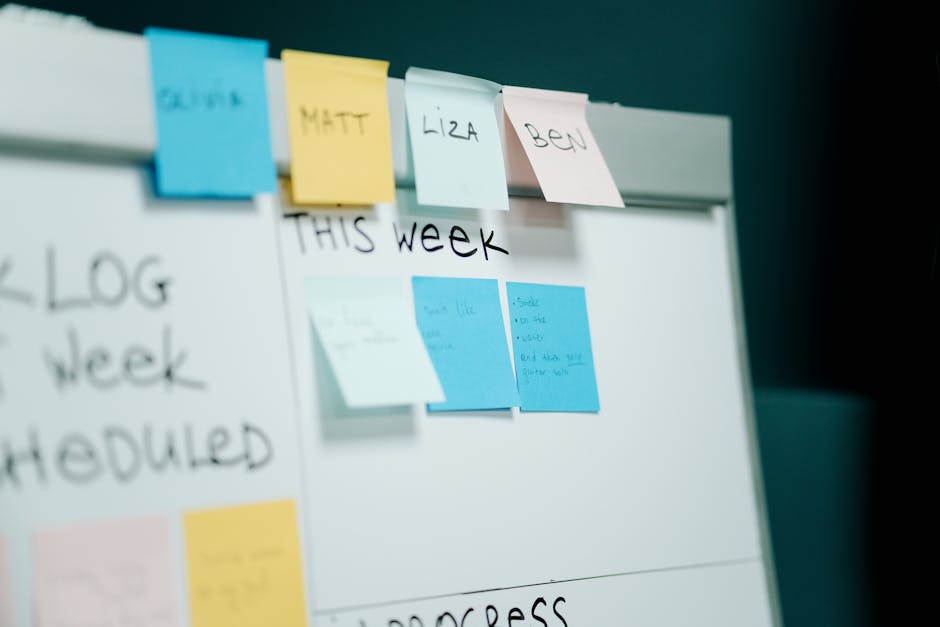
Photo by cottonbro studio on Pexels
Task Management Mastery: The High-Performer's Blueprint for Peak Productivity
High performance isn't about working harder; it's about working smarter. And at the heart of working smarter lies effective task management. This isn't about fleeting productivity "hacks." It's about building sustainable systems that fuel consistent output while preserving your sanity.
Deconstructing Task Management: Beyond the To-Do List
Task management is more than just a list of things to do. It's a holistic process encompassing:
- Planning: Defining objectives and breaking them down into actionable steps.
- Prioritization: Identifying the most impactful tasks and focusing your energy there.
- Execution: Diligently working through your tasks, minimizing distractions.
- Tracking: Monitoring progress and adjusting your approach as needed.
- Review: Analyzing completed tasks to identify areas for improvement.
The Problem with Reactive Task Management
Many professionals fall into the trap of reactive task management, constantly responding to emails and urgent requests. This approach leads to: burnout, a feeling of constant overwhelm, and a failure to make progress on truly important goals. The high-performer avoids this by proactively planning and prioritizing.
Building Your Task Management System: The Core Principles
A robust task management system should be personalized to your workflow and preferences. However, certain core principles apply universally:
1. Capture Everything: The External Brain
Your mind is for thinking, not remembering. Free up mental bandwidth by capturing every task, idea, and commitment in a trusted system. This could be a digital tool, a physical notebook, or a combination of both.
- Inbox Zero for Tasks: Treat your task inbox like your email inbox. Process it regularly and move items to the appropriate list or folder.
- Avoid Mental Clutter: Write it down immediately. Don't rely on your memory.
2. Define Priorities: The Power of the Pareto Principle
Not all tasks are created equal. Apply the Pareto Principle (80/20 rule) to identify the 20% of tasks that will generate 80% of the results. Focus relentlessly on these high-impact activities.
- Eisenhower Matrix: Categorize tasks as urgent/important, not urgent/important, urgent/not important, and not urgent/not important. Delegate or eliminate everything but the urgent/important and strategically schedule the not urgent/important.
- Value-Based Prioritization: Align your tasks with your core values and long-term goals.
3. Time Blocking: Sculpting Your Day for Deep Work
Protect your time by scheduling specific blocks for focused work. This prevents distractions and allows you to enter a state of flow.
- Theme Days: Group similar tasks together to minimize context switching. For example, dedicate one day to writing, another to meetings, and another to administrative tasks.
- The Pomodoro Technique: Work in focused bursts of 25 minutes, followed by a 5-minute break. This can improve concentration and prevent burnout.
4. The Importance of Review: Refining Your Process
Regularly review your task management system to identify areas for improvement. What's working well? What's not? What adjustments can you make to optimize your productivity?
- Daily Review: Briefly review your task list at the end of each day to plan for the next.
- Weekly Review: Conduct a more thorough review of your goals, projects, and tasks. Identify any roadblocks and make necessary adjustments.
- Quarterly Review: Step back and evaluate your overall progress towards your long-term goals. Are you on track? Do you need to recalibrate your strategy?
Technology and Task Management: Choosing the Right Tools
Numerous task management tools are available, each with its own strengths and weaknesses. Choose tools that align with your workflow and preferences. Popular options include:
- Asana: Ideal for team collaboration and project management.
- Trello: A visual, Kanban-style tool for managing tasks and projects.
- Todoist: A simple and intuitive task manager for individuals and teams.
- Notion: A versatile workspace for note-taking, task management, and project management.
A key part of sustainable systems is centralizing information; **KDS Blogger** (https://aiblogger.kierendaystudios.co.uk/) handles this by offering an AI-assisted blogging platform connected to your expertise. High-performers can leverage its capabilities to organize their vision, document their progress, and even create content related to their task management strategies.
Beyond the Basics: Advanced Task Management Strategies
Once you've mastered the fundamentals, consider implementing these advanced strategies to further optimize your productivity:
- Delegation: Identify tasks that can be delegated to others, freeing up your time for more strategic activities.
- Automation: Automate repetitive tasks using tools like Zapier or IFTTT.
- Context Switching Reduction: Minimize distractions and focus on one task at a time.
Weekly Action: Implement the "Next Action" Principle
This week, for every project or goal you have, identify the very next physical action you need to take. Write it down clearly. Make it small, concrete, and achievable. This eliminates ambiguity and makes it easier to get started.


Comments
Post a Comment